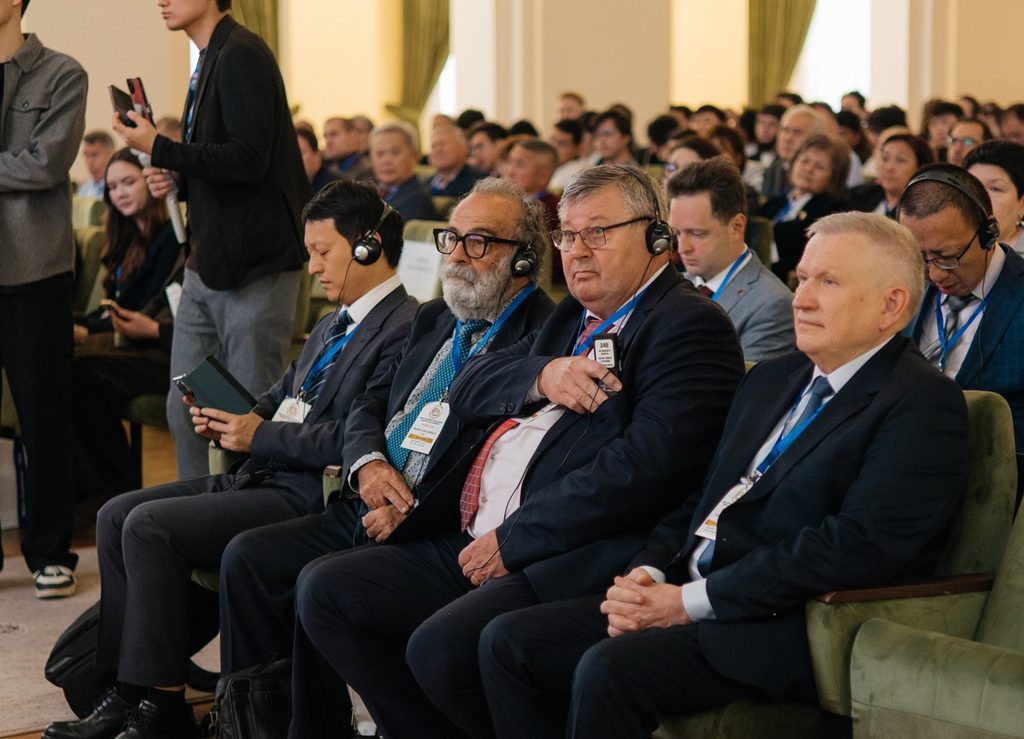

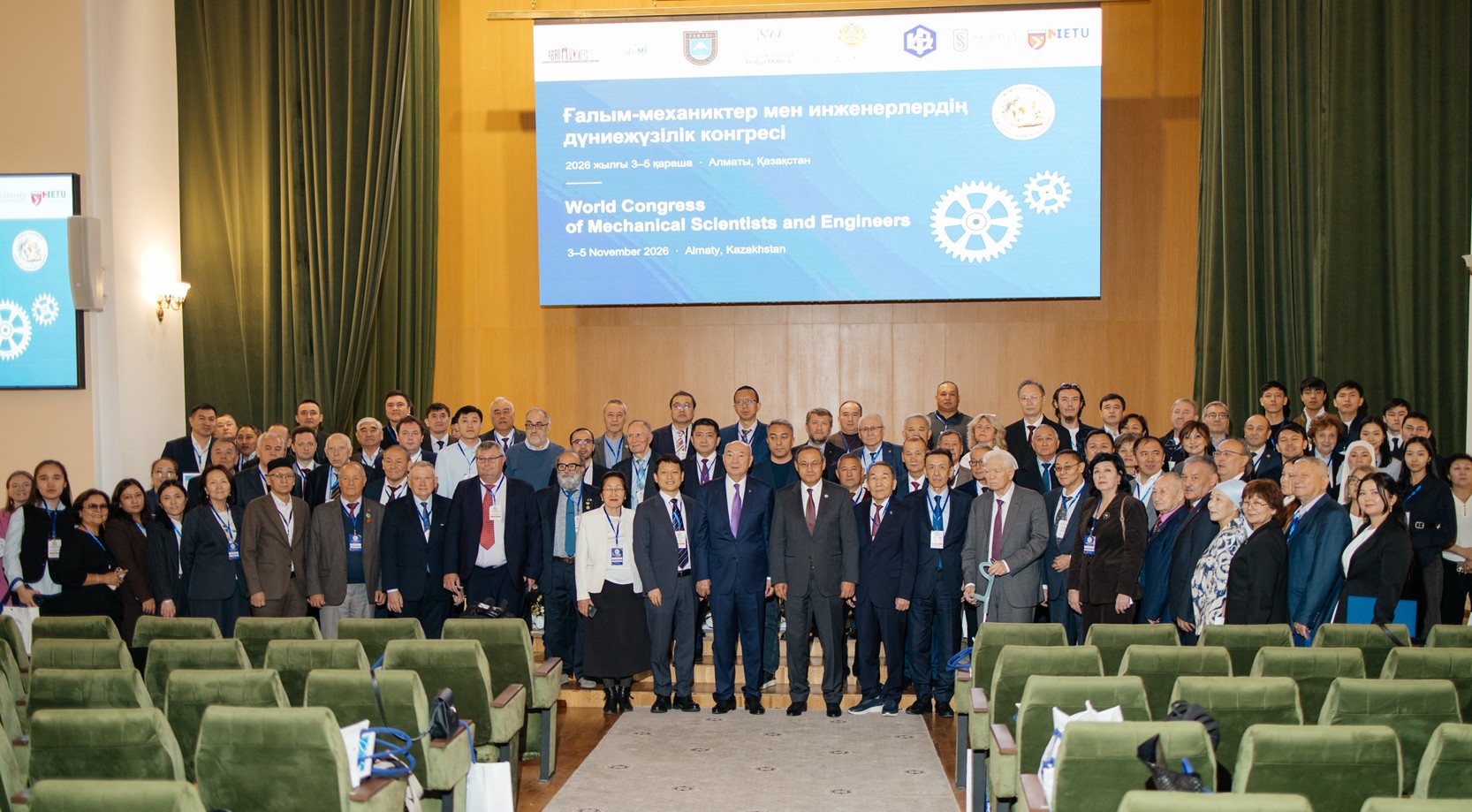
The World Congress of Mechanical Scientists and Engineers WCMSE-2026 served as a practical contribution to the implementation of the priorities outlined by the President of the Republic of Kazakhstan, Kassym-Jomart Tokayev, in his Address to the People of Kazakhstan entitled “Current Priorities of Kazakhstan in a New Historical Cycle,” dated October 28, 2026.
The Congress programme is aimed at addressing the challenges of technological modernization of industry, the introduction of artificial intelligence, and strengthening cooperation between science and the real sector of the economy.
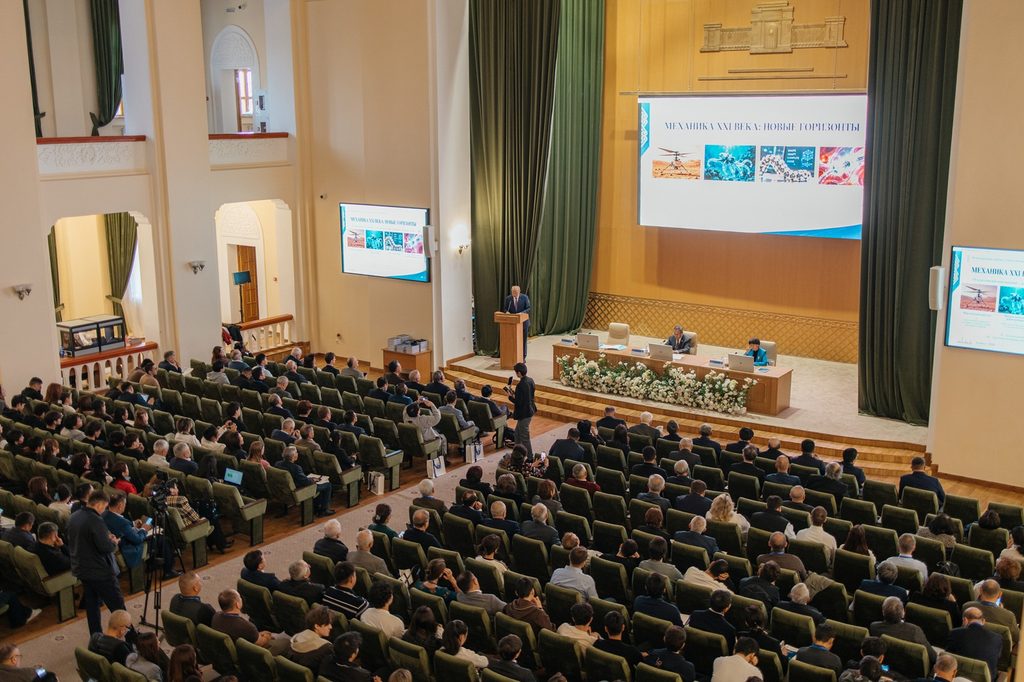
On November 3, 2026, the opening ceremony of the Congress took place in the Grand Hall of Gylym Ordasy in Almaty. Running from November 3 to 5, the Congress brings together more than 500 scientists, engineers, and industry representatives from 18 countries around the world. The Deputy Minister of Science and Higher Education of the Republic of Kazakhstan attended the opening ceremony.
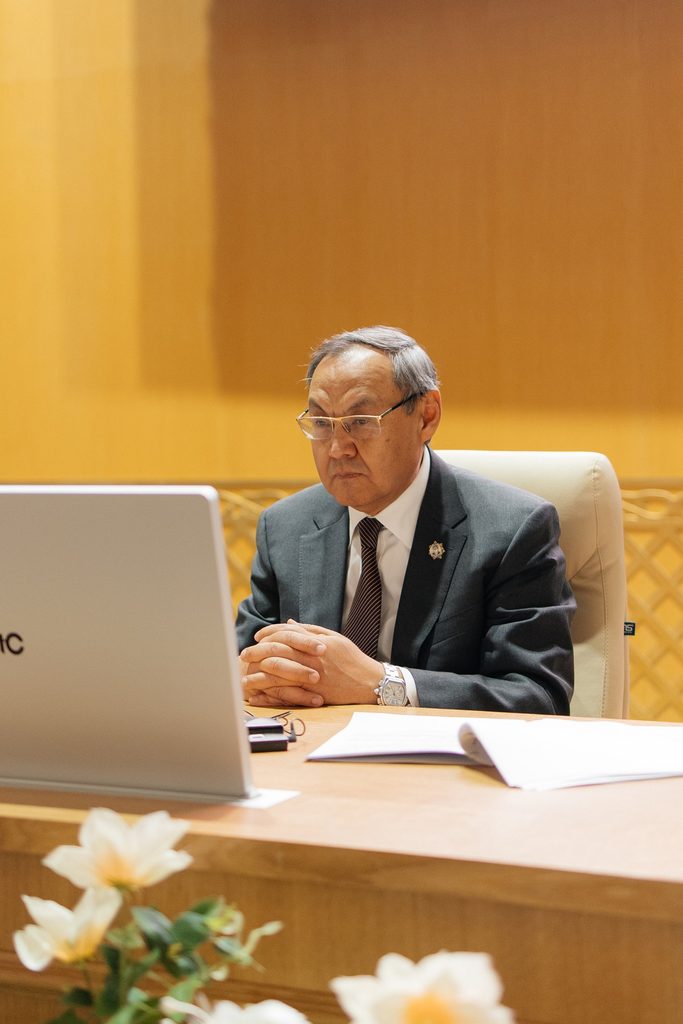
The Congress is dedicated to the 80th anniversary of the National Academy of Sciences of the Republic of Kazakhstan, the 35th anniversary of the National Engineering Academy of the Republic of Kazakhstan, and the 95th anniversary of the birth of Academician Umirbek Joldasbekov, founder of the School of Mechanics, Machine and Mechanism and the National Engineering Academy of the Republic of Kazakhstan.
The organizers of the Congress include the Ministry of Science and Higher Education of the Republic of Kazakhstan; the National Academy of Sciences of the Republic of Kazakhstan under the President of the Republic of Kazakhstan; the National Engineering Academy of the Republic of Kazakhstan; Joldasbekov Institute of Mechanics and Engineering of the Science Committee; Al-Farabi Kazakh National University; Satpayev Kazakh National Research Technical University; Abai Kazakh National Pedagogical University; and International Engineering and Technology University.
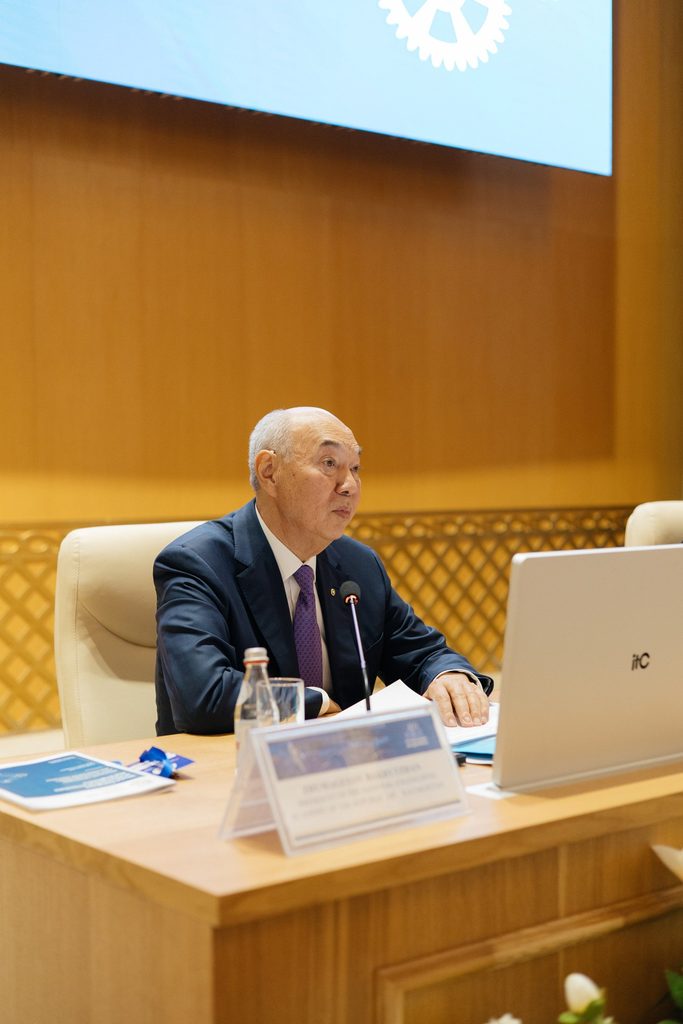
The plenary session addressed key issues related to the development of fundamental and applied mechanics, robotics and artificial intelligence, the application of modelling and machine learning, the training of engineering professionals, and the implementation of scientific developments in industrial production.
The session also featured the presentation of four monographs in the “Ғылыми мұра” (“Scientific Heritage”) series, prepared based on the results of research and development projects.
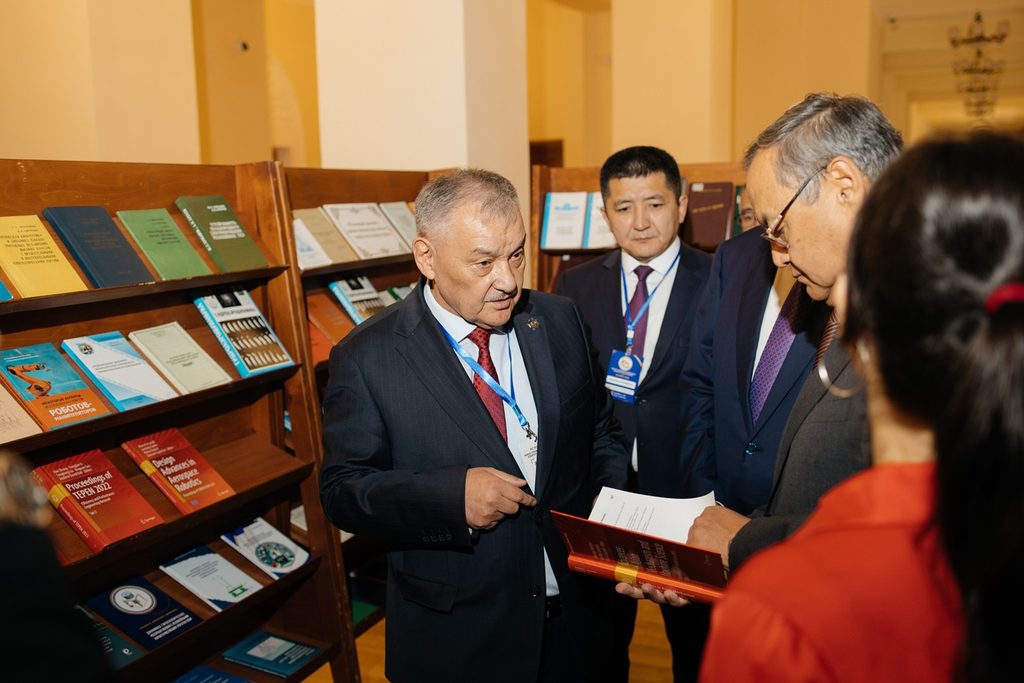
On the first day of the Congress, an Exhibition of Achievements in Science, Engineering and Technology, featuring more than 100 exhibits, was held. The programme also included an international round table entitled “Science and Industry: Mechanics, Robotics, and Technological Solutions for Enterprises in Kazakhstan.” Joint developments by Kazakhstani and Chinese partners for industrial applications were presented at the event.
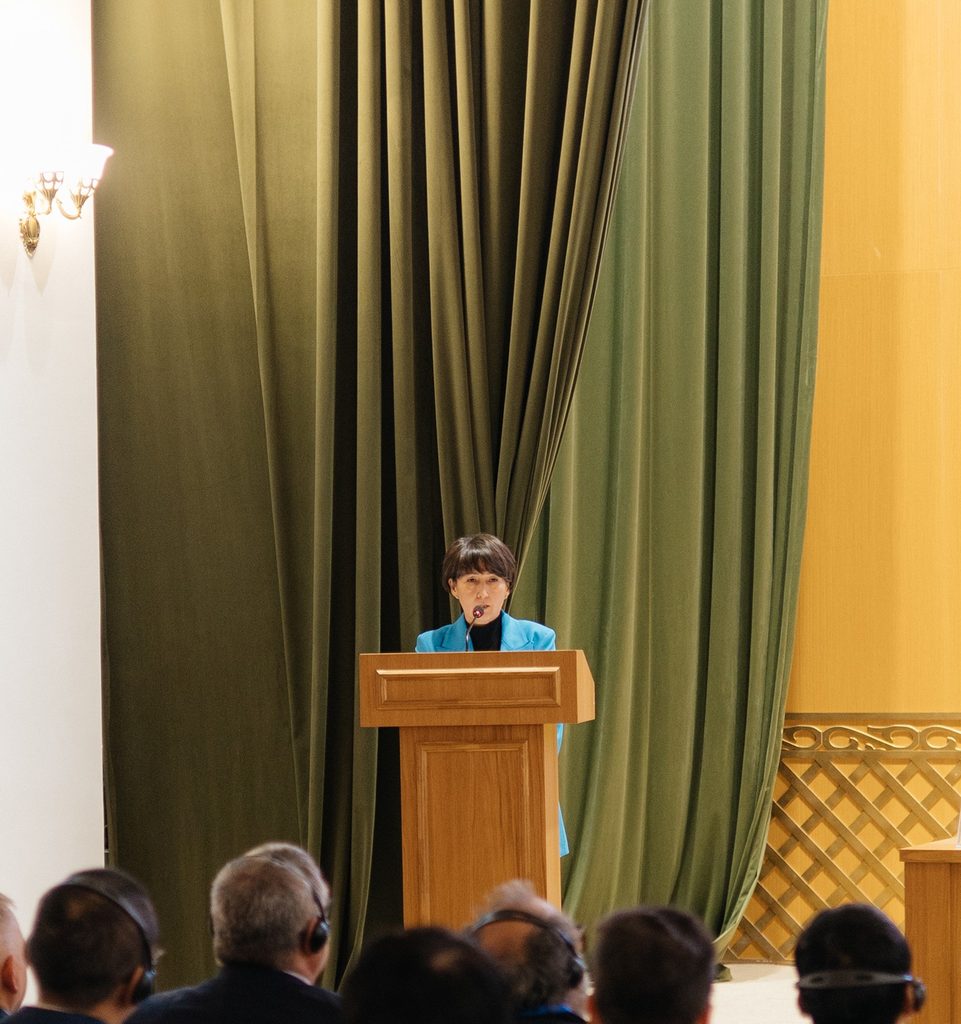
One of the key events was the opening of the Kazakhstan–China Centre for Prototyping of Machines, Robots and Automation Systems at the Damu Industrial Zone, established under the Joldasbekov Institute of Mechanics and Engineering (JIME).
The establishment of the Centre is in line with the national policy aimed at developing high-tech industries and expanding international scientific and technological cooperation. Its activities are focused on strengthening domestic engineering capabilities and preparing scientific developments for industrial application.
On November 4, six international scientific conferences will be held at the Gylym Ordasy venue and at universities in Almaty. Their topics will cover geomechanics and geotechnics, fluid and gas mechanics, mechanics of machines and mechanisms, robotics and mechatronics, inverse problems and mathematical modelling, space technologies, and engineering education.