

On September 17, 2026, the first open conceptual session, “Qazaqstan AI for Science,” organized by the National Academy of Sciences of the Republic of Kazakhstan under the President of the Republic of Kazakhstan, was held in Almaty.
The event focused on developing a common understanding of the Qazaqstan AI for Science concept and identifying the key conditions for the responsible and effective application of artificial intelligence technologies at all stages of the research cycle—from formulating a scientific hypothesis to achieving practical results.
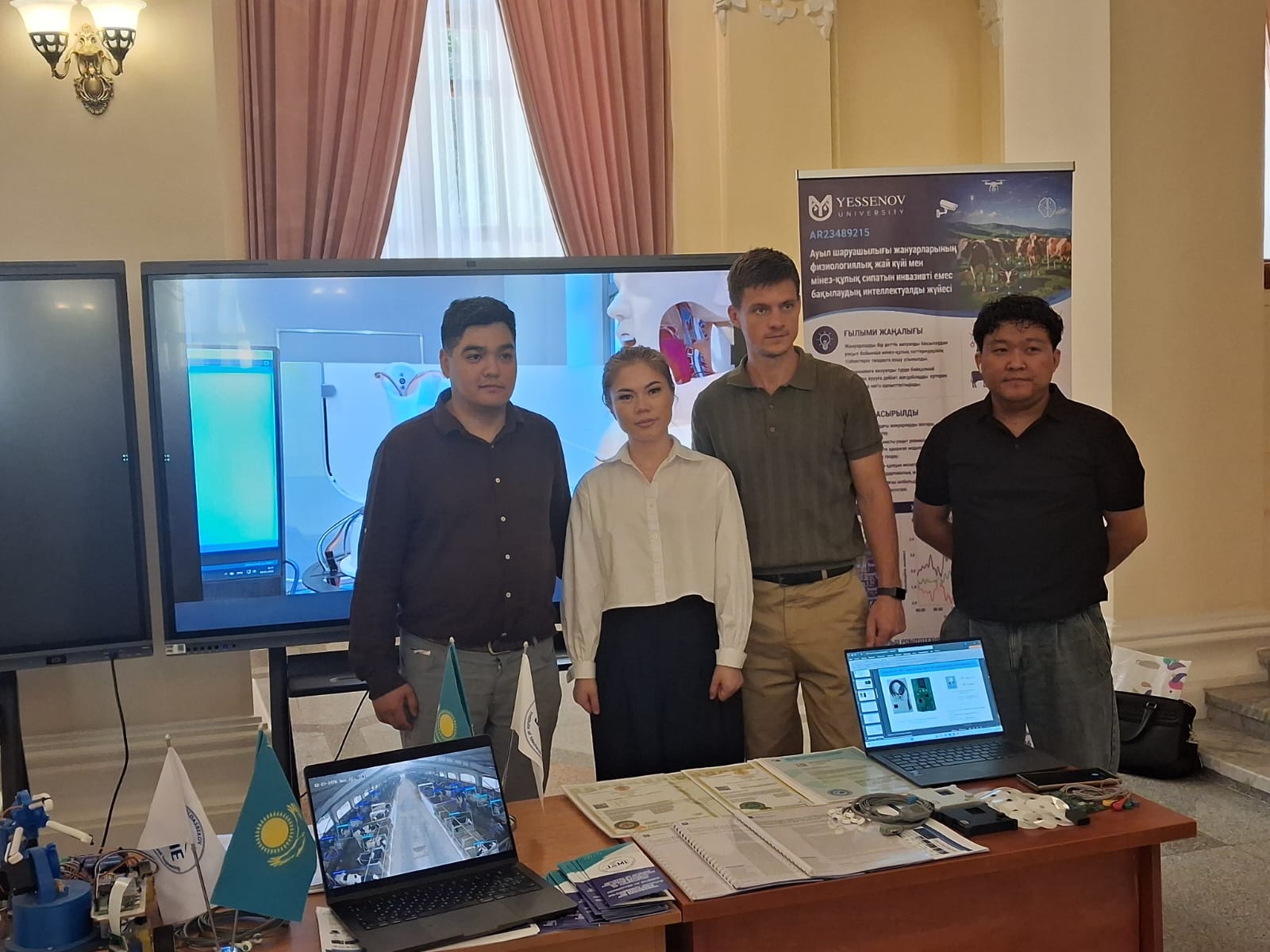
As part of the session, an exhibition of scientific developments was held.
Joldasbekov Institute of Mechanics and Engineering presented a number of promising scientific and technical developments at the exhibition.
The developments “Intelligent Robotic Complex for the Automated Sorting and Transportation of Spherical Fruits” and “Intelligent Robotic System for the Automated Collection of Biomaterials and PCR Diagnostics” were presented by Suleimen Talgatovich Kaimov, the research project leader.
The first development is designed for the automated identification, sorting, grasping, and transportation of spherical fruits. It integrates robotics, computer vision, intelligent control, and mobile monitoring technologies, providing a foundation for automating the sorting and transportation of agricultural products.
The second exhibit is an experimental robotic system designed to automate individual stages of the collection, processing, and preparation of biological material for PCR analysis. The system is equipped with a robotic manipulator and a specialized actuating device for work with biological samples. In automated mode, the robot performs a predefined sequence of operations on the biomaterial: it positions itself relative to the target object, collects the sample, and transfers it to a designated container for subsequent laboratory processing and PCR analysis.
The exhibition also featured the project “Development of a Non-Invasive Device for Determining Blood Glucose Levels Using Electrocardiogram Analysis in Patients Diagnosed with Diabetes.” The research project leader is Chingiz Abdraimovich Alimbayev.
The development is aimed at creating a device capable of determining blood glucose levels without traditional invasive blood sampling by analyzing electrocardiographic signals. The project is of interest in terms of advancing intelligent diagnostic technologies and applying data processing and analysis methods for solution of crucial tasks in modern medicine.
The exhibition also featured developments carried out jointly with Yessenov University under the supervision of Oleg Ivashchuk:
an improved prototype of a specialized mobile robotic platform for video surveillance;
a prototype of an intelligent computer vision system for monitoring and managing livestock, capable of analyzing at least 10 operational parameters.
The presented developments are focused on the use of intelligent systems and computer vision to automate monitoring, improve management efficiency, and support decision-making across various application areas.
The Institute’s participation in the exhibition provided an opportunity to demonstrate concrete results of its scientific research, in which intelligent technologies are already being applied to address practical challenges—from the robotization of agricultural and laboratory processes to computer vision, monitoring, and intelligent diagnostics.