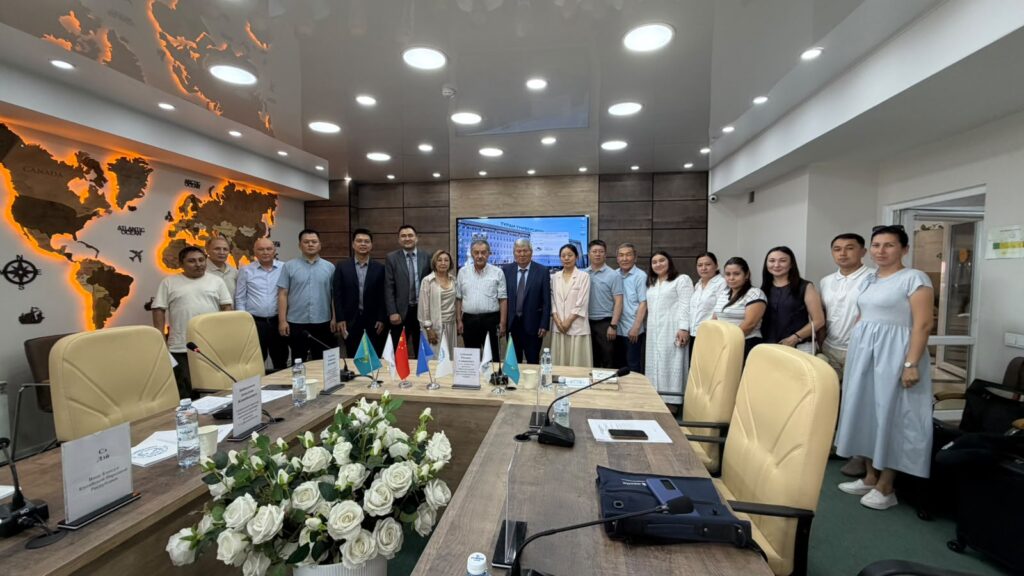

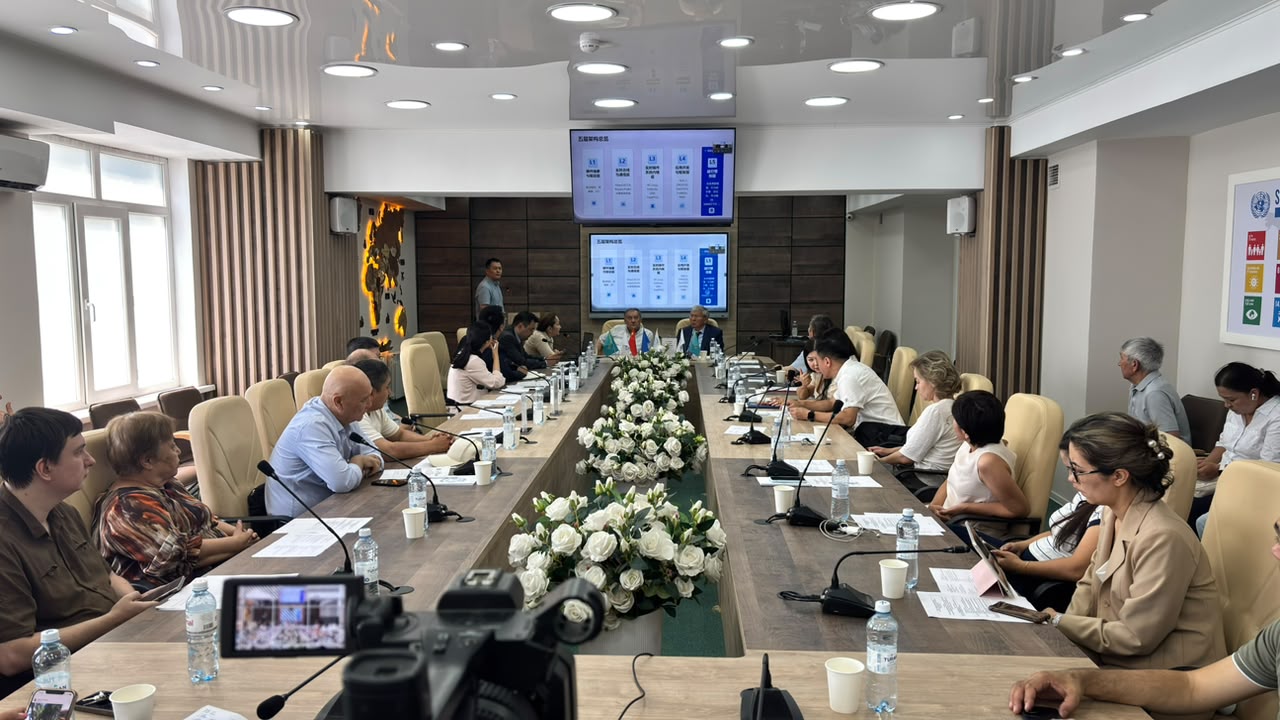
On July 16, 2026, Turan University (Almaty) hosted the International Scientific Seminar “Modern Technologies for Control and Modeling of Robotic Systems.” The event continued the international scientific dialogue initiated the previous day in Kostanay during the presentation of the interim results of the scientific and technical program of the U. Joldasbekov Institute of Mechanics and Engineering, dedicated to the development of domestic robotic solutions for the automotive industry.
The seminar was moderated by Asylkhan Bibossinov, Director General of the U. Joldasbekov Institute of Mechanics and Engineering, and Dina Razakova, Vice Rector for Strategic Development, Science and Innovation at Turan University.
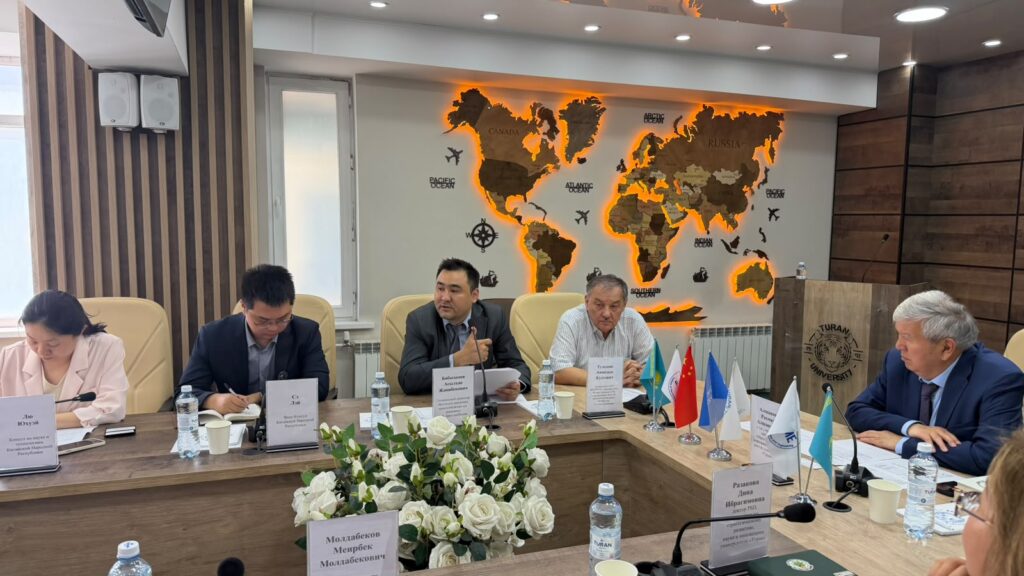
The keynote presentations were delivered by researchers from the Shenyang Institute of Automation, Chinese Academy of Sciences.
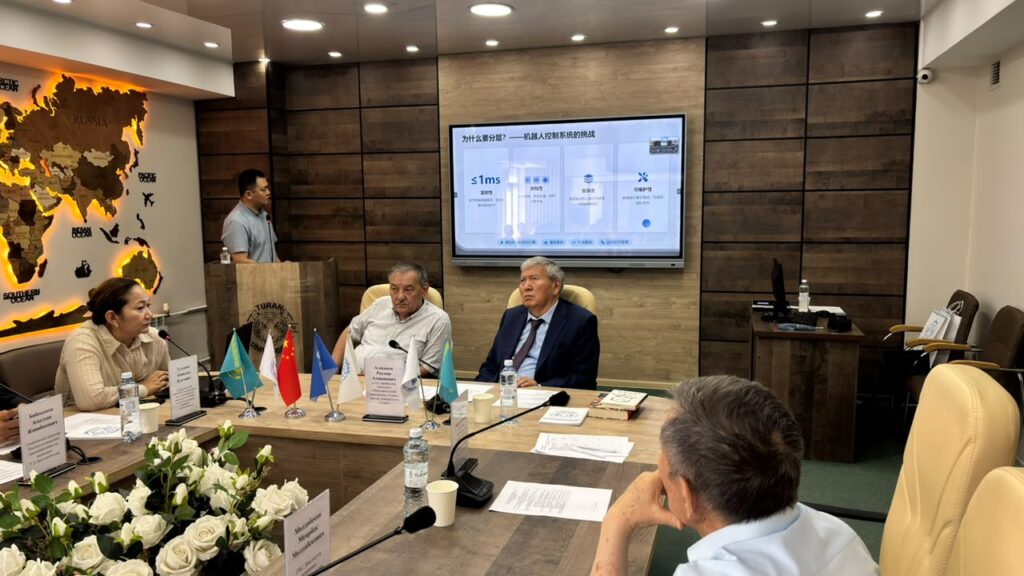
Associate Professor Lü Peng presented a lecture entitled “Typical Architectures of Robot Control Systems and Their Application Areas.” In his presentation, he reviewed the major layers of robotic system architecture, ranging from hardware interfaces and industrial communication networks to real-time operating systems and software development platforms. Particular attention was drawn to the comparison of CAN and EtherCAT technologies, as well as an overview of the capabilities of the TwinCAT, CODESYS, and ROS platforms. Using examples of various classes of industrial robots, the speaker demonstrated modern approaches to the design of robot control systems and highlighted current trends in robotics, including the integration of artificial intelligence technologies.
Associate Professor Chang Yong delivered a presentation entitled “Kinematic Modeling Methods for Manipulator and Mobile Robots.” He discussed contemporary approaches to developing kinematic models based on homogeneous transformation matrices, explained the principles of constructing the Jacobian matrix and its application in analyzing the relationship between the motion of a robot’s end-effector and its actuators. Special attention was given to the kinematic modeling of multi-wheeled mobile platforms, including the specific characteristics of robot motion over uneven terrain.
The seminar brought together researchers, faculty members, doctoral candidates, and master’s students. The presentations generated considerable interest among the participants, who exchanged views on the prospects for applying the presented approaches in Kazakhstan’s robotics sector and discussed opportunities for future collaborative research.